
Some flights are just better than others. I still haven’t had a “perfect flight.” There’s always some aspect of the flight—I missed or bungled a radio call, it was bumpy, there was a headwind for some (or all) of the flight, in a lapse of judgement I decided to treat the centerline as a suggestion on landing instead of a requirement, and the list goes on and on.
However, some factors can outweigh others. If the headwinds aren’t too bad, then smooth air cancels them out. If there’s time in IMC, the reward of breaking out into a breathtaking view makes it worth it. And if there’s a tailwind, then the bumps don’t seem to bother me as much. What if you could combine all the good and leave out all the bad? That’s exactly what happened on June 26th over the course of two flights.
Our newest granddaughter had been born earlier in the month in Idaho Falls, and the pictures we were getting were wonderful, but we were itching to get there to meet her in person. However, before launching to Idaho Falls I wanted to get in a quick flight and hopefully grab an approach in IMC that morning. I needed one more approach before the end of the month to be current going into July and always prefer actual to simulated IMC.
A Little Morning Instrument Practice
The marine layer had been showing up like normal through the month of June, often called “June Gloom,” but the past few days it had also been burning off early. My alarm went off at its usual 4:30 a.m. and I rolled out of bed, got dressed, picked up a weather briefing, and headed to the airport. After pre-flight, I climbed in, started up, and taxied to the run-up area. I think I was the only thing moving at the airport.
I figured that I wouldn’t have a hold for departure, so I went through my takeoff checklist and got everything set before calling up SoCal on my phone via the Bluetooth in my PMA 450B Audio Panel. If you’ve never experienced it, it is amazing. It’s just like talking on the phone but through your headset.
He answered and I told him I had an IFR plan on file and wanted to just depart Fullerton and fly the RNAV 24 approach back to a full stop. He told me to stand by, so I started taxiing while I waited for him to get back to me, again with anticipation that I would get an immediate release. I would just stop on the taxiway when he came back—like in ’Twas the Night Before Christmas, there was nothing stirring at the airport. I was almost at the end of the taxiway when he came back and asked if I was ready to copy.
I stopped and confirmed I was ready to copy and received my clearance. After the readback he asked if I was ready for departure, which I confirmed. He cleared me, gave me a void-if-not-off time, and said, “I’ll talk to you in a few minutes.”
I announced taking the runway and a left crosswind departure, made another check of final, gave a little throttle to roll onto the runway, then pushed it in all the way and was airborne at 5:59 a.m., climbing toward the 1,800’ overcast. The same voice from the phone call greeted me when I checked in and told me to climb and maintain 3,000’ along with a heading. Leveling off at 3,000’ I could just barely see hints of the sun trying to fight its way down into the layer.
Speaking to nobody but myself I said, “We might get some sun… maybe… Oh there it is! Oh, yes! That’s awesome!” (Anyone else just talk to themselves when you’re alone in the plane?)
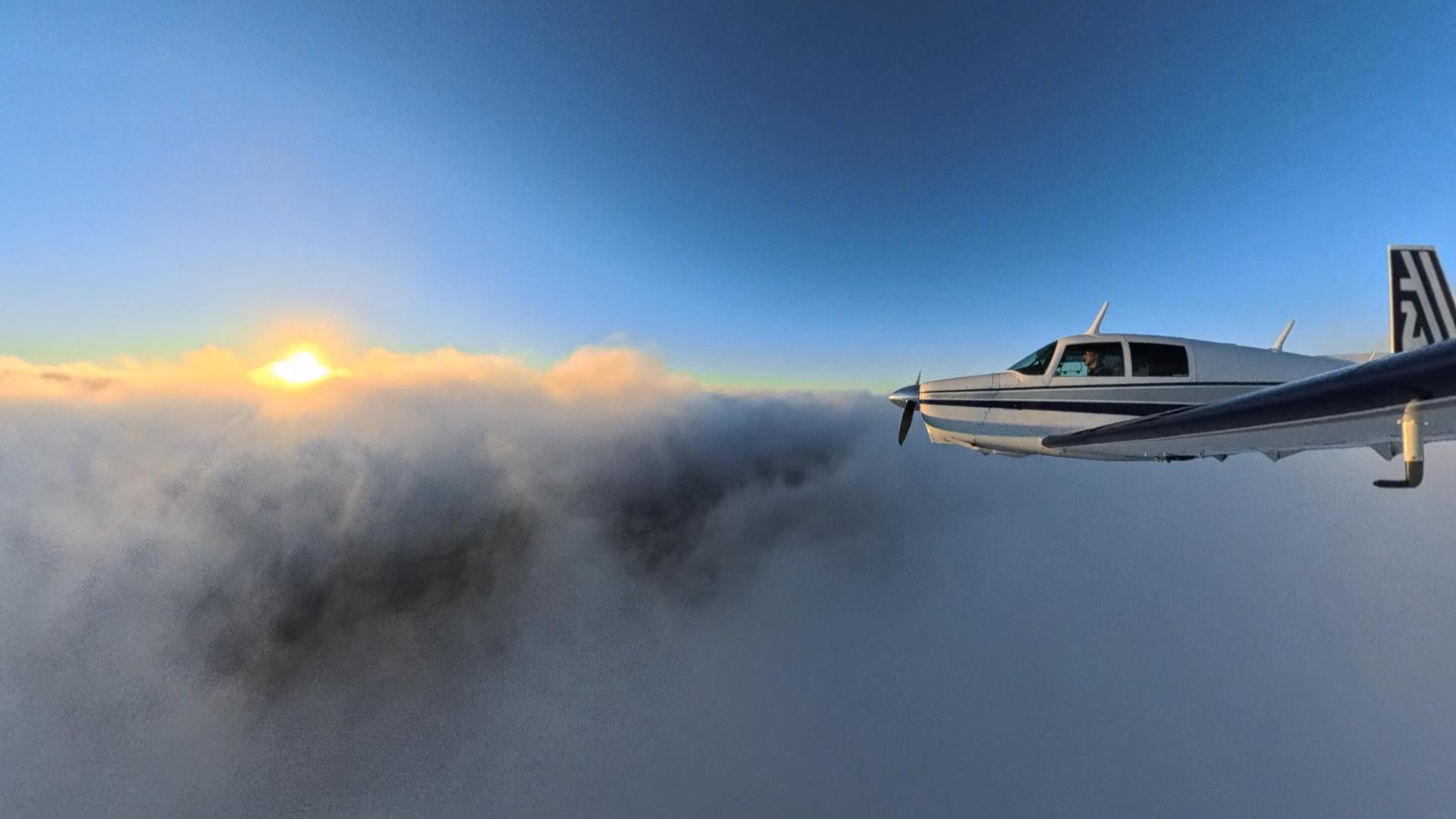
I had broken out and was just skimming the tops of the clouds with the sunrise right in front of me. I cruised along, skipping through a thin cloud here and there before finally running into a bank where I would remain until breaking out on the approach. I think it was a total of about 90 seconds, and it was glorious. A couple of vectors later and I was established on the approach, eventually broke out, and came in for a nice landing.
Could the Tailwinds be that good?
With the plane back in the hangar, I hopped in the truck and headed home to pick up my wife. Why not have her just drive and leave her car at the airport, you ask? Well, she was going to stay in Idaho Falls a couple of extra days, then fly home commercial, and I didn’t want to drive back to FUL to get her car after picking her up at SNA the next week.
Before I get to the flight I need to go back to the day before when I planned it. I always plan a fuel stop when flying from Fullerton (FUL) to Idaho Falls (IDA). It’s about 780 miles; I cruise at 172 mph on 9.5+ gph, so with no wind that’s about 4.5 hours and 43+ gallons of fuel. My plane holds 52 gallons; my personal minimum is to be on the ground with 10 gallons in the tank I’m flying on, so it pretty much guarantees a fuel stop.
The problem I saw is that all my regular stops—MLF, DTA, FOM, even if I went to TVY—were forecast to have very strong winds. We’re talking about gusts over 40 mph. Earlier in the week there were airlines that diverted from SLC because of the winds. Winds up into the low 30s, okay, as long as they are down the runway. Pushing above 40, no thanks.
But then another thought crept into my mind. The winds at 10,000’ were going to be good—really, really good. I’m talking almost aligned with my route of flight and 30–40+ mph for huge sections of it and parallel with the mountain ridges. It looked like just a river of air flowing up the valleys I would be flying. What if I could make the flight in about 4+ hours, lean it back to about 9 gph, and not make a fuel stop?
Running lean of peak just isn’t a thing in my carbureted Mooney; the fuel/air mixture differences between the cylinders is too great, but I can run right around 9 gph at 9,500’. The further I got north of OGD the winds on the ground were more manageable. After more deliberation and looking at options I decided that we would try to make it without a stop, and if the fuel planning wasn’t working out because of winds we would stop in Malad (MLD), Preston (U10), or Bear Lake (1U7). I knew I could make the flight and land with the VFR minimum of 30 minutes, but that is not my minimum of 10 gallons. I also reminded myself a few times that I set that minimum when I started flying and it was inviolate, never to be broken.
Yes, I know that it is above the FAA minimum, but I have read too many accident reports that started because pilots violated their personal minimums. Ten years and 1,300+ hours later I hadn’t broken it yet and wasn’t going to do it on this flight.
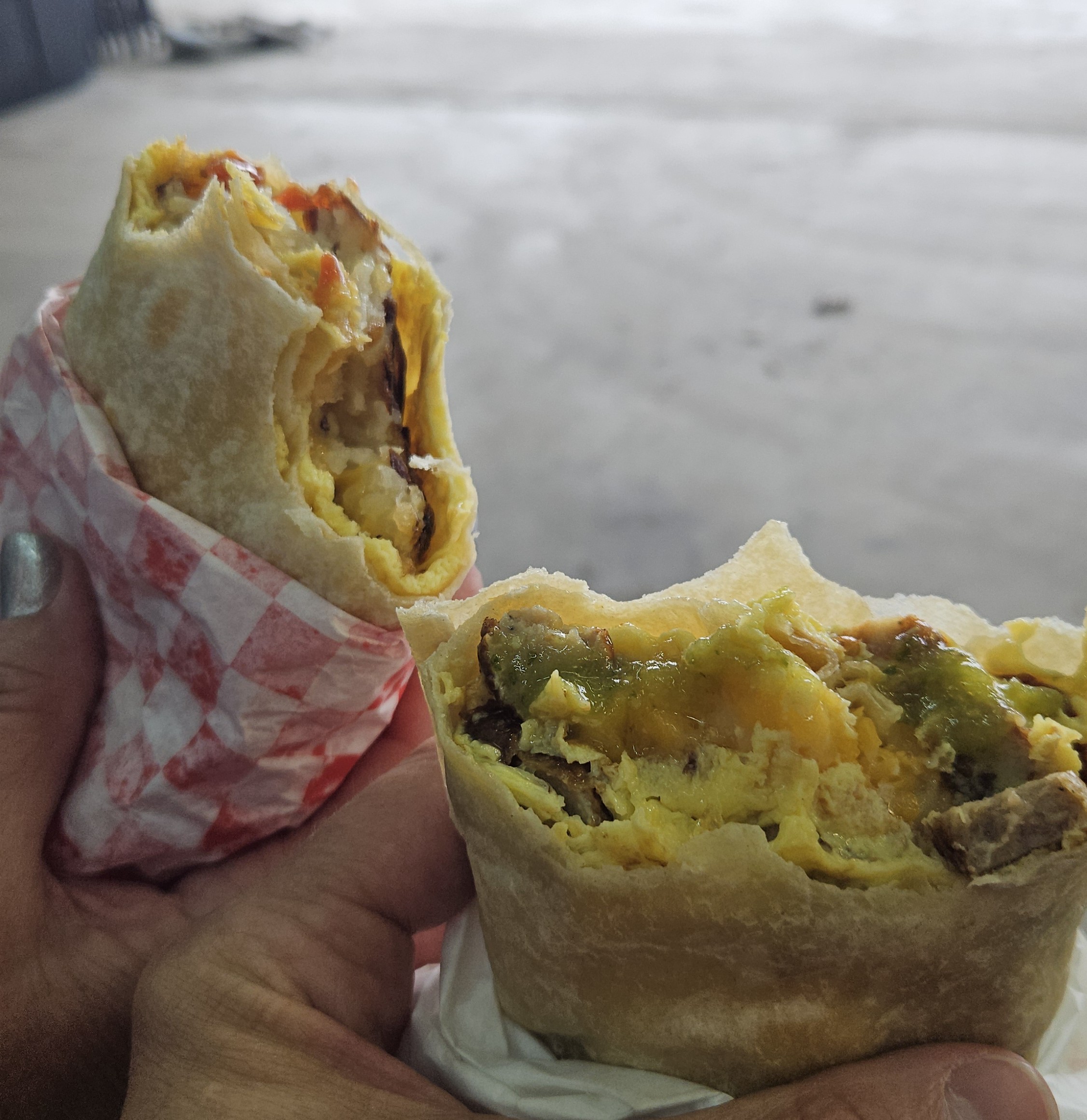
We stopped at the Golden Ox on the way to the airport to pick up breakfast burritos. A nice sausage-egg breakfast burrito is good for ensuring no restroom breaks are needed along the way. Often I pull the plane just out of the hangar for the fuel truck, but there’s a little bit of a slope and you can’t really fill the tanks, so I pulled it all the way to the flat area. When the fuel truck showed up, I told them to top it off as full as they could get it. They all seem to have a different definition of “top off,” sometimes leaving a ½ to full inch for expansion, but I wanted every drop of fuel I could get.
The marine layer was still a little patchy, so I picked up my IFR clearance and we were airborne at 9:18 a.m. By about 2,200’ we were on top and at 3,400’ I told SoCal I would cancel IFR and proceed VFR. I didn’t want to waste time and fuel getting climb vectors.
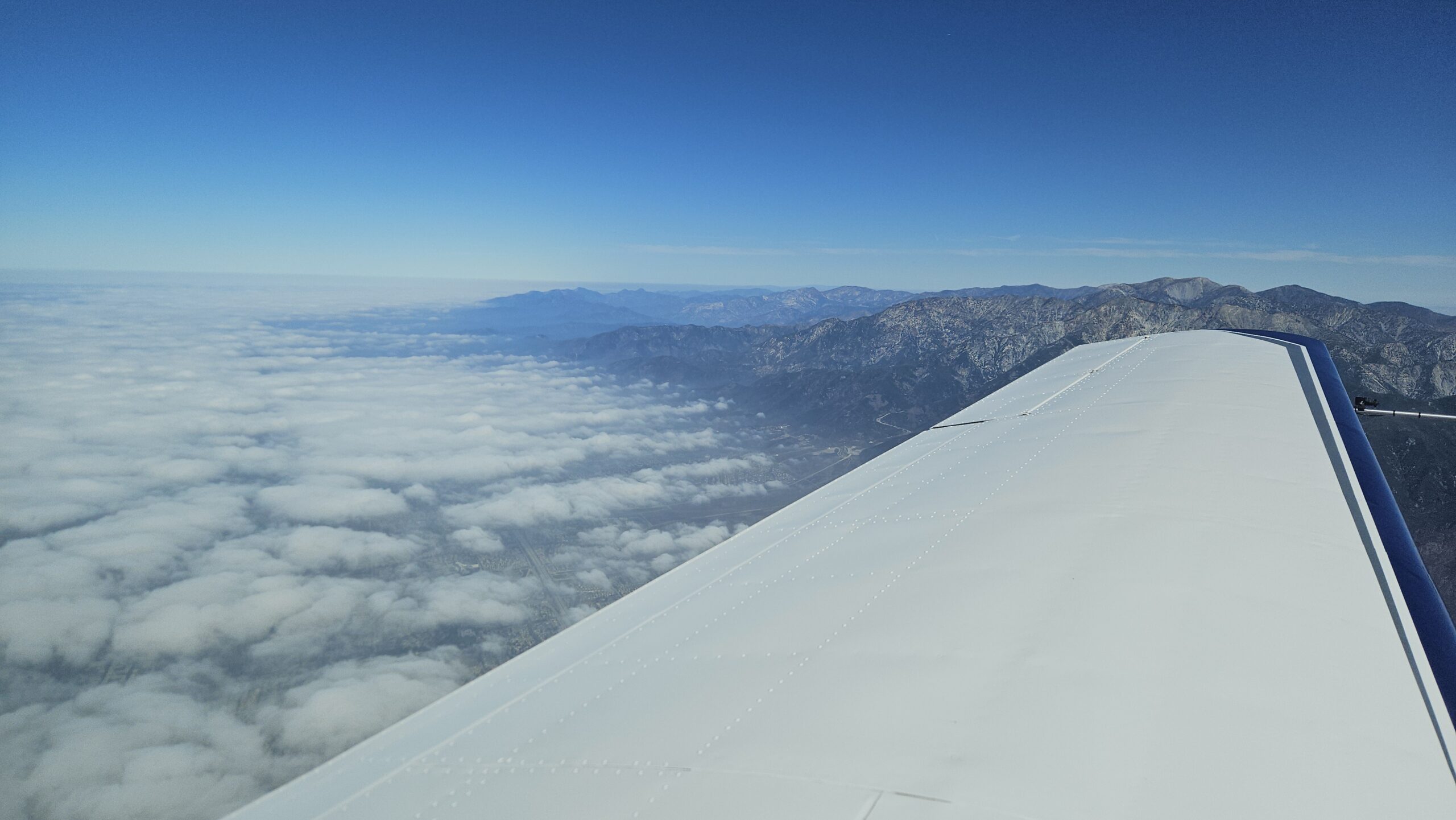
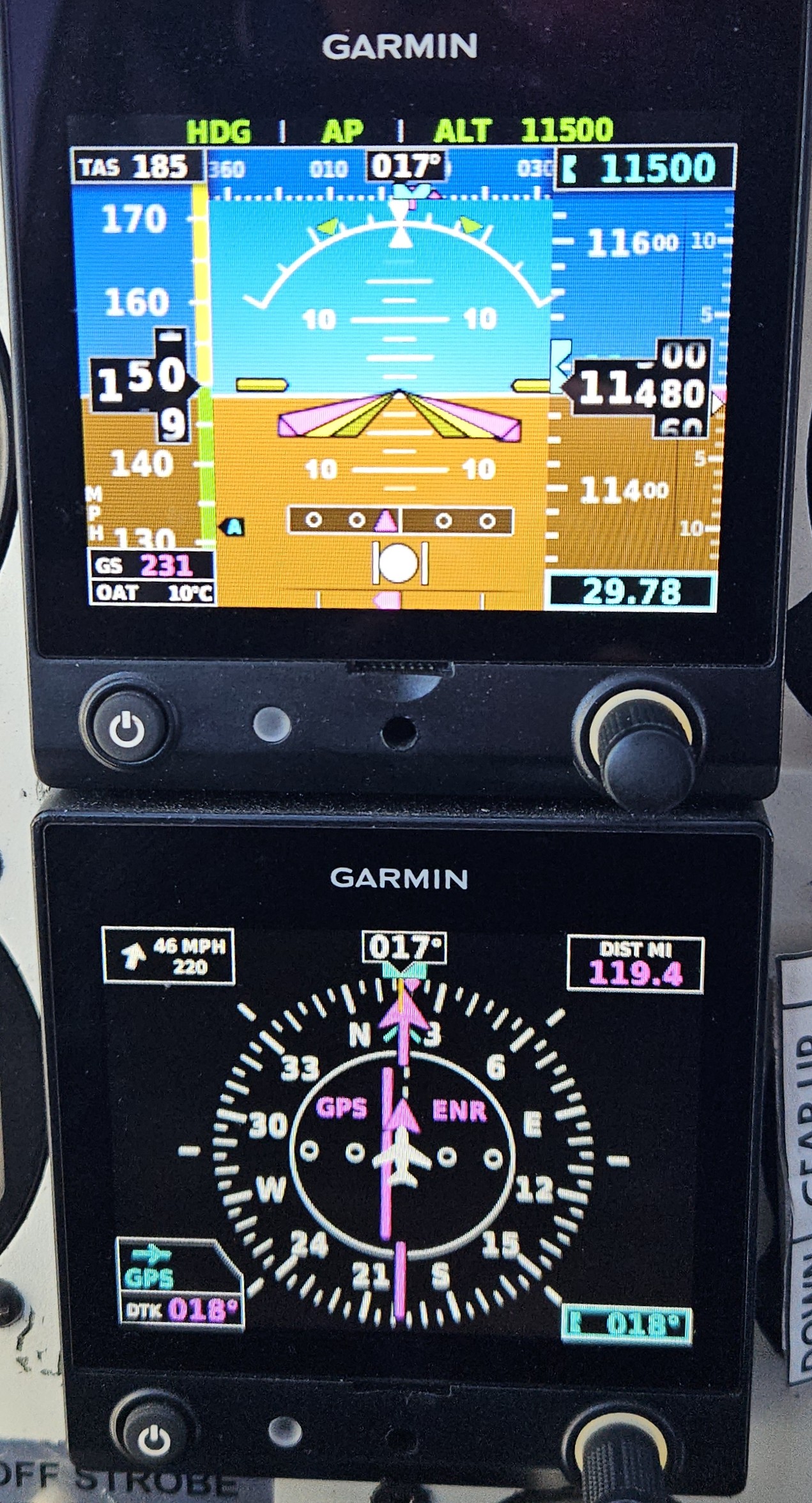
The winds did not disappoint. Passing through 9,000’ still in a climb of 115 mph IAS, our ground speed was pushing above 150 mph. Normally I will fly that route VFR at 9,500’ because after I pass about 10,000’ I start losing speed in cruise; the engine just loses power the higher you go. However, the tradeoff on this flight was better winds, so we took the climb all the way to 11,500’. Our Inogen G5 oxygen concentrator kept sats in the upper 90s.
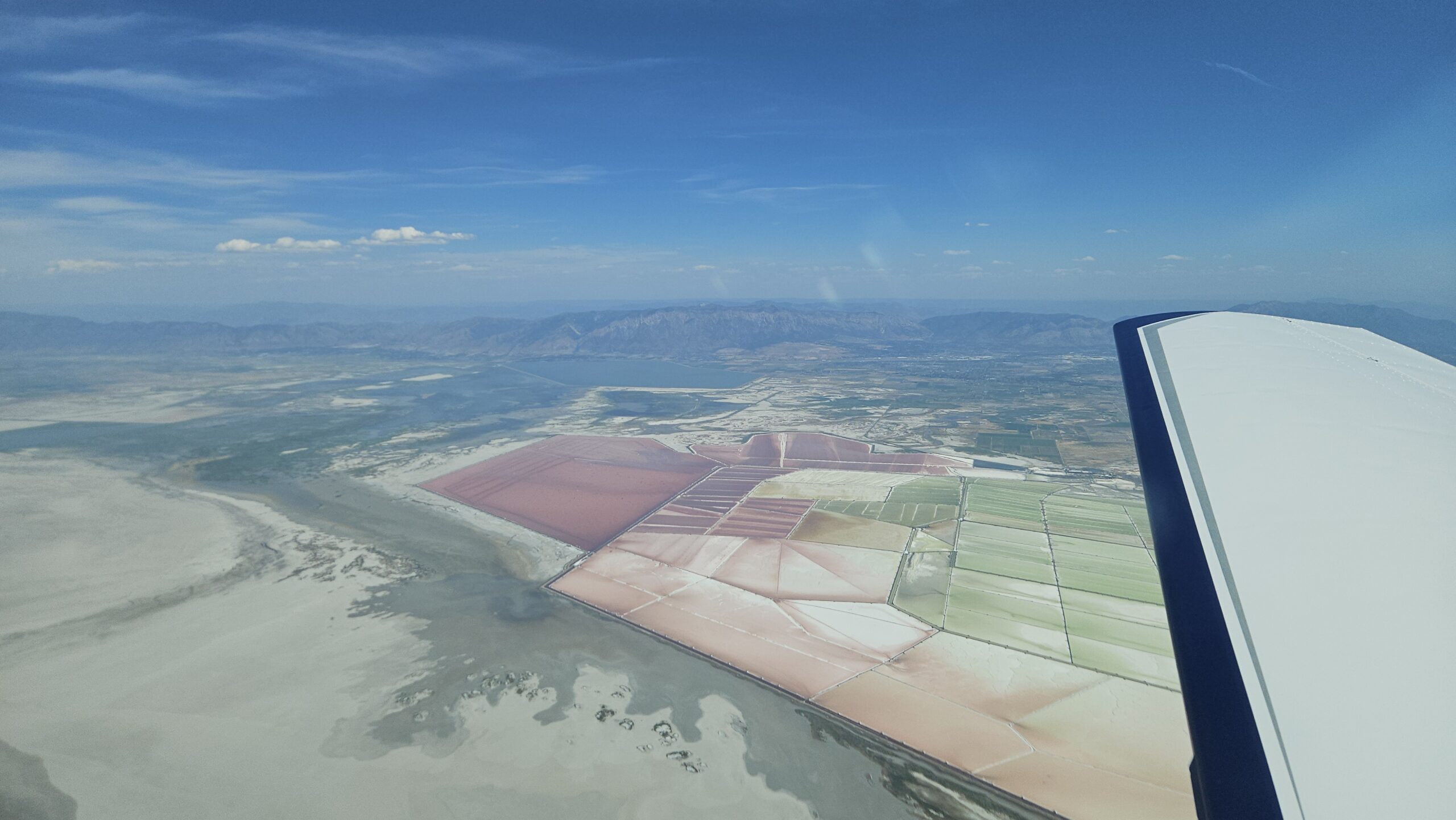
This is where the fun really began. With a TAS showing between 170–180 mph depending on the up and down movement of the air, our groundspeed was spending a lot of time above 200 mph. An hour and 15 minutes in we were flying over Vegas, and just over 3 hours in we were passing Salt Lake. It usually takes around 3½ hours to get to Provo; we were really moving along. I had been burning right at 9 gph, and unless the winds reversed by some miracle we were going to make it without a fuel stop.
We began our descent 25 minutes out and landed with 12 gallons on board, 4 hours and 13 minutes after taking off. We had flown 794 miles, non-stop, with an average groundspeed of 188 mph including the climb. I know you folks with the Bravos, Ovations, and Acclaims are faster than that, but I’m talking about my little converted M20D with a 180 hp Lycoming O-360. And all but the last part of the flight was as smooth as it could be; I think Kathy slept almost the whole way.
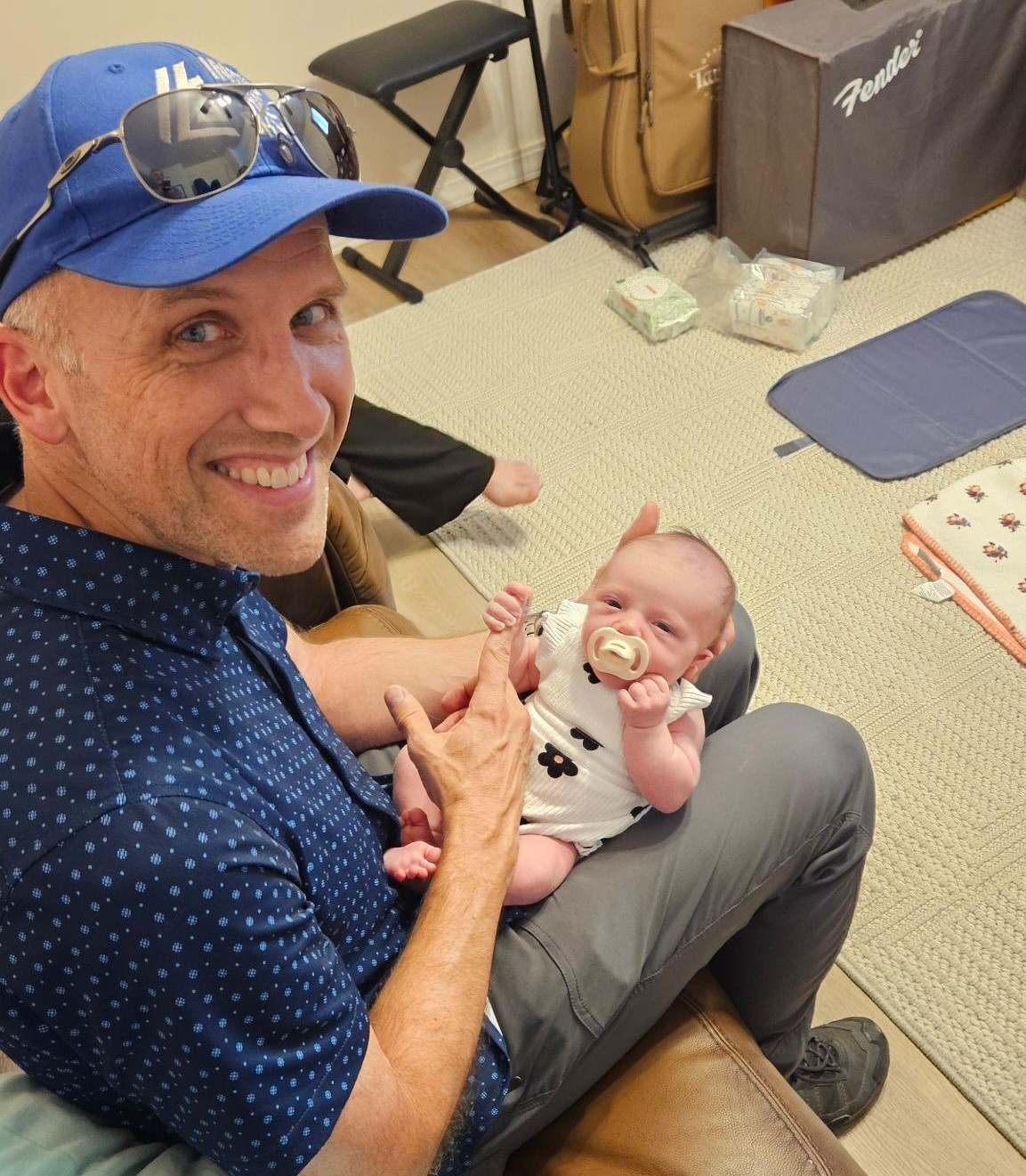
We picked up the rental car and headed over to meet the newest member of the family. I know everyone says all babies are beautiful, but let’s be honest, sometimes that’s just what you’re supposed to say. But in this case, she really is beautiful. A smooth flight with amazing tailwinds and a beautiful granddaughter—what more can you ask for?