
They say that hindsight is 20/20. It doesn’t matter how bad your vision is looking forward; it’s perfect looking back. The kids have all moved away and only return to visit, which is a great thing. The problem is that all the grandkids are also far away, and on holidays like Christmas, my wife wants to be grandma. It’s a good thing we have a Mooney.
Plan A
Here’s the plan. We would fly our youngest home commercial from St. George, UT, on Christmas Eve. Christmas Day would be spent at home, and then on the 26th, we would fly the Mooney up to Provo to have a family Christmas party.
The forecast showed that the 25th would be marginal for flying, but the 26th should be great. Forecasts are often wrong, and that was the case this time too. We woke up Christmas morning, and it was a beautiful day for flying. The forecast for the 26th looked ‘possible’ but not ‘wonderful.”
Do you want to just pack up and go today?’ asked my wife.
‘Not really,’ I replied.
‘How does it look tomorrow?’
‘I think it will work,’ I said.
I really meant it; I didn’t just say it because I didn’t feel like changing plans and flying right now. And the forecast really did look flyable.
The next morning, the 26th, I got up and looked at the weather. It wasn’t exactly what had been forecast the day before, but I still thought I saw a way to make it work. Rain was moving in from the southwest, and the clouds were getting hung up along the foothills between Orange and Riverside counties. Everything in Orange County was IFR, and almost everything in Riverside County was VFR. If I could just get past the foothills, everything would work.
I filed a VFR flight plan and picked up a briefing. IFR just doesn’t work from here to Utah in the winter because you are up at 10,000’ on the departure to clear the big rocks, and that puts you into the freezing levels. I looked at the radar picture and the TAFs and determined where the window was with a break in the rains that would let me depart Fullerton and get to the VFR skies past the foothills. From there, we would scoot through the Banning Pass under the cloud deck that was sitting around 4-5,000’ and into the clear skies of Palm Springs before turning north.
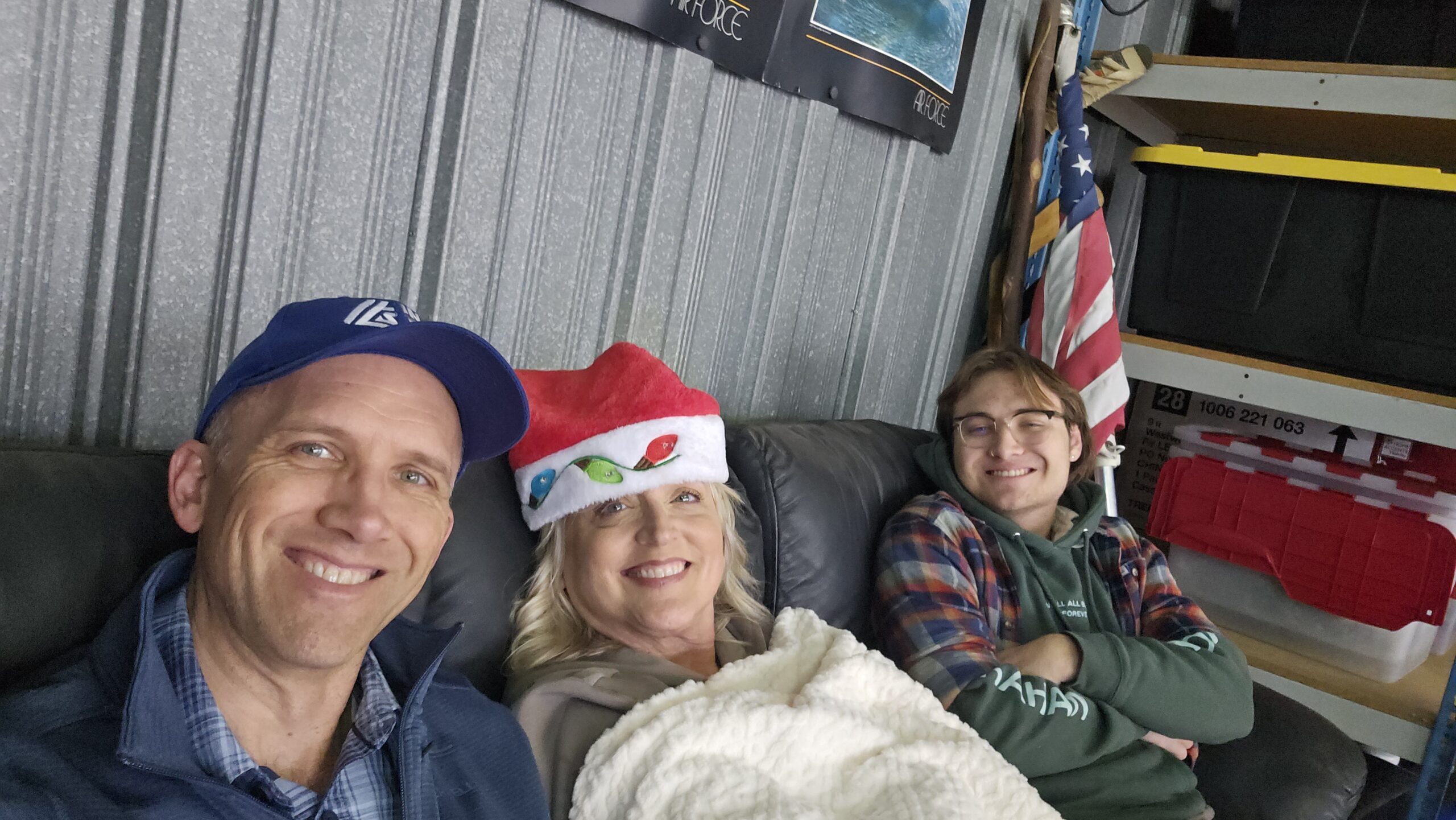
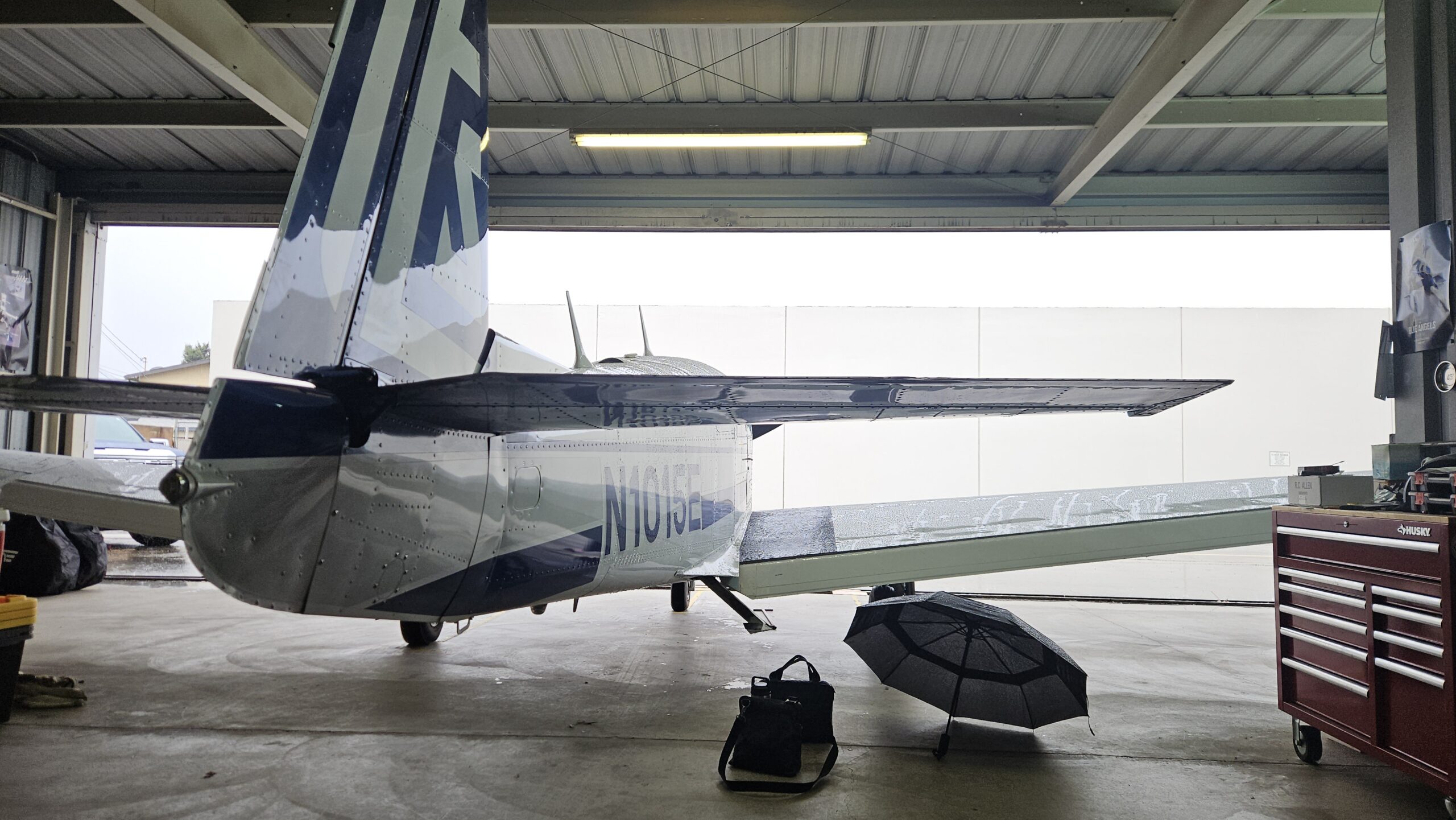
Once at the hangar, we loaded up the plane, and then all three of us kicked back on the couch, watching the rain fall outside the hangar. I had the Windy app open on my phone and was watching the radar picture and all those little green dots representing VFR airports just on the other side of the foothills. After about 20 minutes or so, I saw what I thought was our chance. A large break in the rain was heading our way. I watched as Long Beach, 9 miles away, and Los Alamitos, 6 miles away, both went VFR. But the rain stopped at Fullerton, and it stayed IFR—there was just too much mist in the air.
Creating Plan B
‘If we don’t go, it’s okay,’ my wife said with her head lying on my shoulder.
When we first started flying, the understanding was that there are no flights that must happen. Flying is always optional, and any number of factors can cause a flight to be canceled. My wife has always been completely supportive and never put any pressure on me to fly, even if the reason is ‘I just don’t feel like it today.’
Just then, I had a thought. I don’t need to fly IFR from Fullerton to Provo; I just need to be IFR to get out of Orange County. I pulled up the TEC routes to see my options. If you’re not familiar with TEC routes, they are pre-published, typically low-altitude routes for short flights that remain inside the TRACON airspace. The CSTP16 route from KFUL to F70 (French Valley) only goes up to 5,000’, which keeps me well below the forecast freezing level at 7,000’. We could fly to F70, cancel IFR, and continue on our way to Provo.
I filed the flight plan on my phone, got my weather briefing, and with a light rain/mist falling, pulled the plane out of the hangar. The current weather was winds variable at 4, 4 miles visibility with light rain and mist, 600’ broken, 2,100’ overcast. We taxied out, finished the runup, picked up the IFR clearance, and were shortly on our way. Approaching 600’, I was on the instruments as we started going in and out of clouds, and before we got to 2,000’, we were in solid IMC.
The clearance was the standard departure, which starts with a left turn to heading 120 and radar vectors to the Seal Beach VOR. The only part of the clearance I flew was turning to a heading of 120, which isn’t all that unusual in this airspace. After that, it was all vectors until we intercepted the final approach course. We spent about 30 minutes in the clouds, breaking out just before intercepting the final approach course at the IAF (initial approach fix).
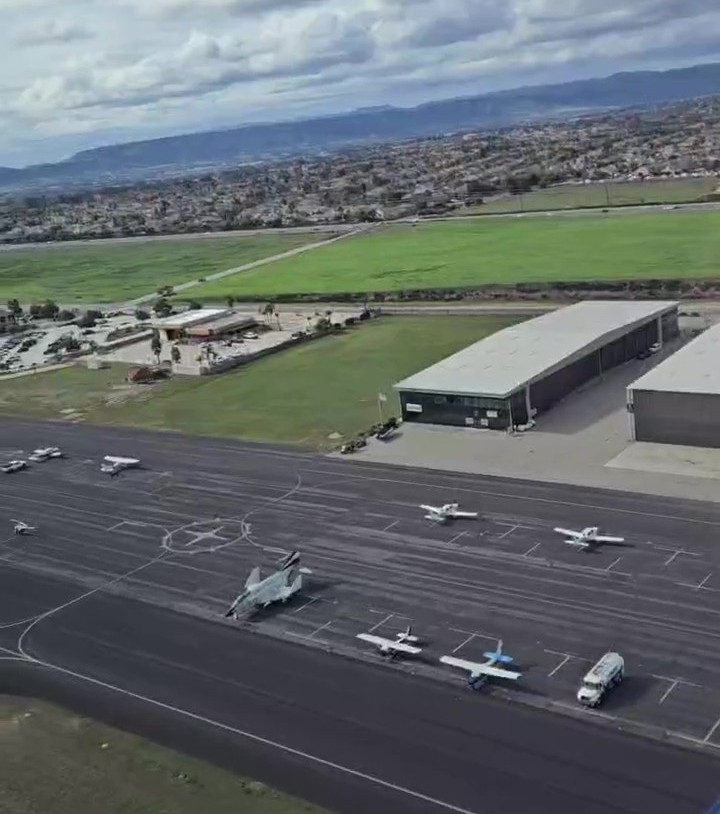
Once on the final approach, I canceled IFR, and we were told to squawk 1200 and change to the advisory frequency. I could have broken off the approach at that point but decided to continue just to get some practice button-pushing while VFR and letting the autopilot fly us down the approach. The GFC500 must be disengaged below 200’ AGL on approach, so just before reaching the decision altitude of 1,600’ MSL (250’ AGL), I kicked it off and started cleaning up the plane to go missed. As we flew down the runway, we were treated to the view of an F-4 parked on the ramp.
One More Change to Plan C
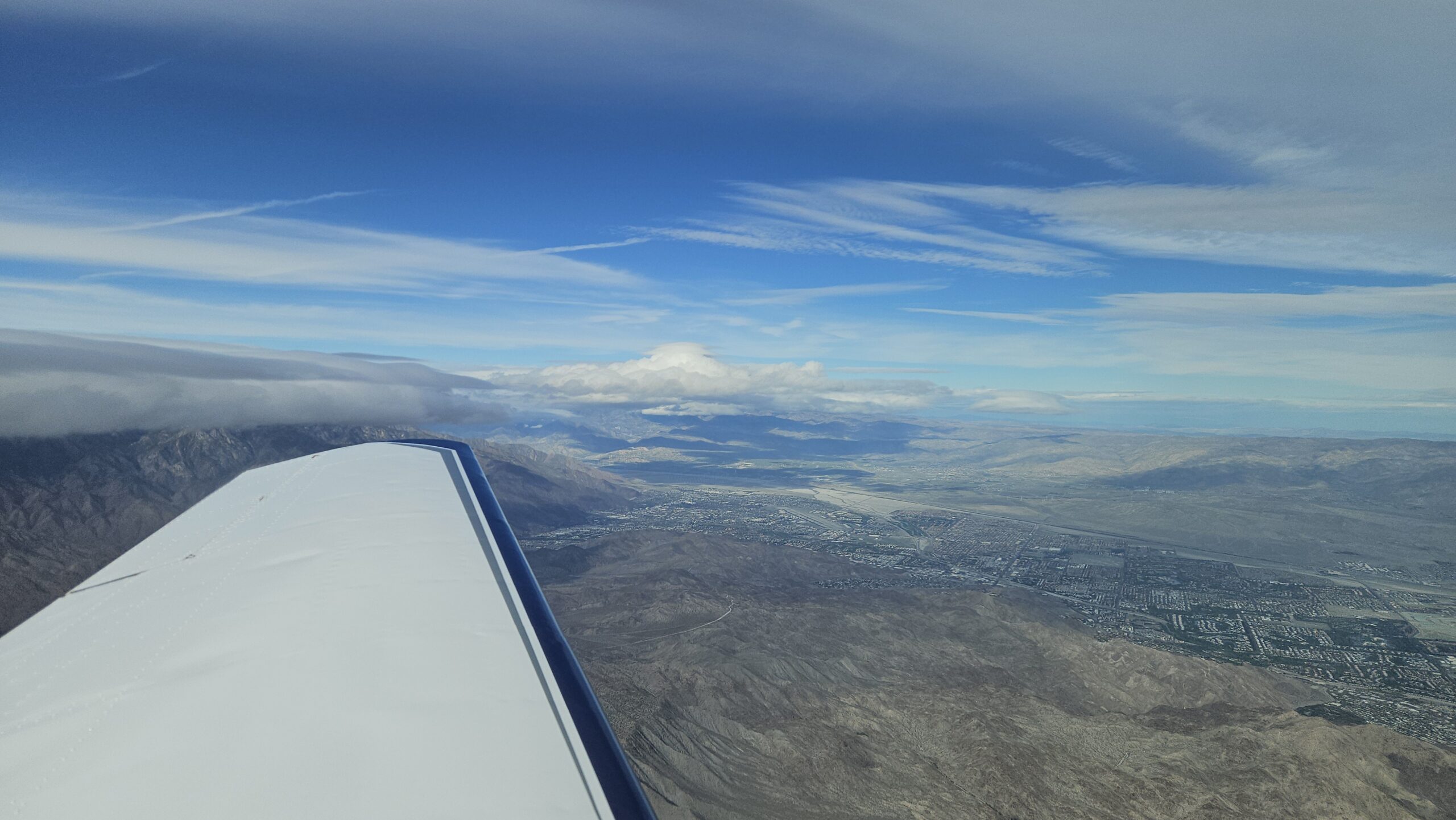
I still needed to call one more audible. Visibility was great, and I could see the Banning Pass about 25 miles to the northeast had heavy rain falling in it, but directly to the east, the skies above the Santa Rosa Mountains were clear. We turned east, began our climb to 9,500’, and once past the peaks, turned north to fly the gap between the Bristol and Turtle MOAs.
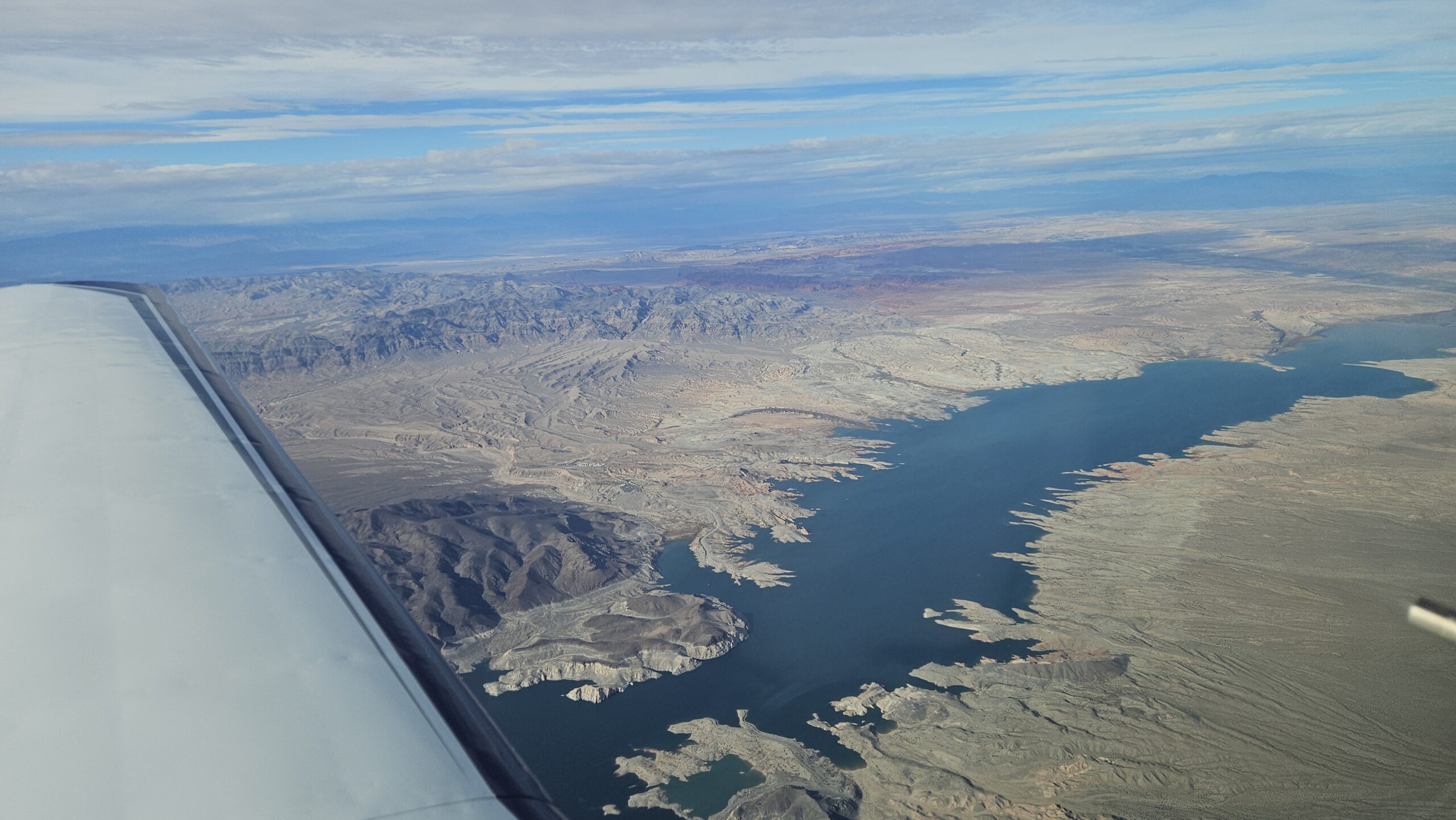
We had great tailwinds the rest of the flight, with groundspeeds staying above 190 mph almost the whole way. Leveling off and pulling power back as we came across Utah Lake toward the Provo Airport, we were still showing 170 mph ground speed, setting the stage for a spicy little landing. We turned final with a direct 35 mph crosswind, and I was looking at the runway out of the left side of the windscreen as we crabbed down final.
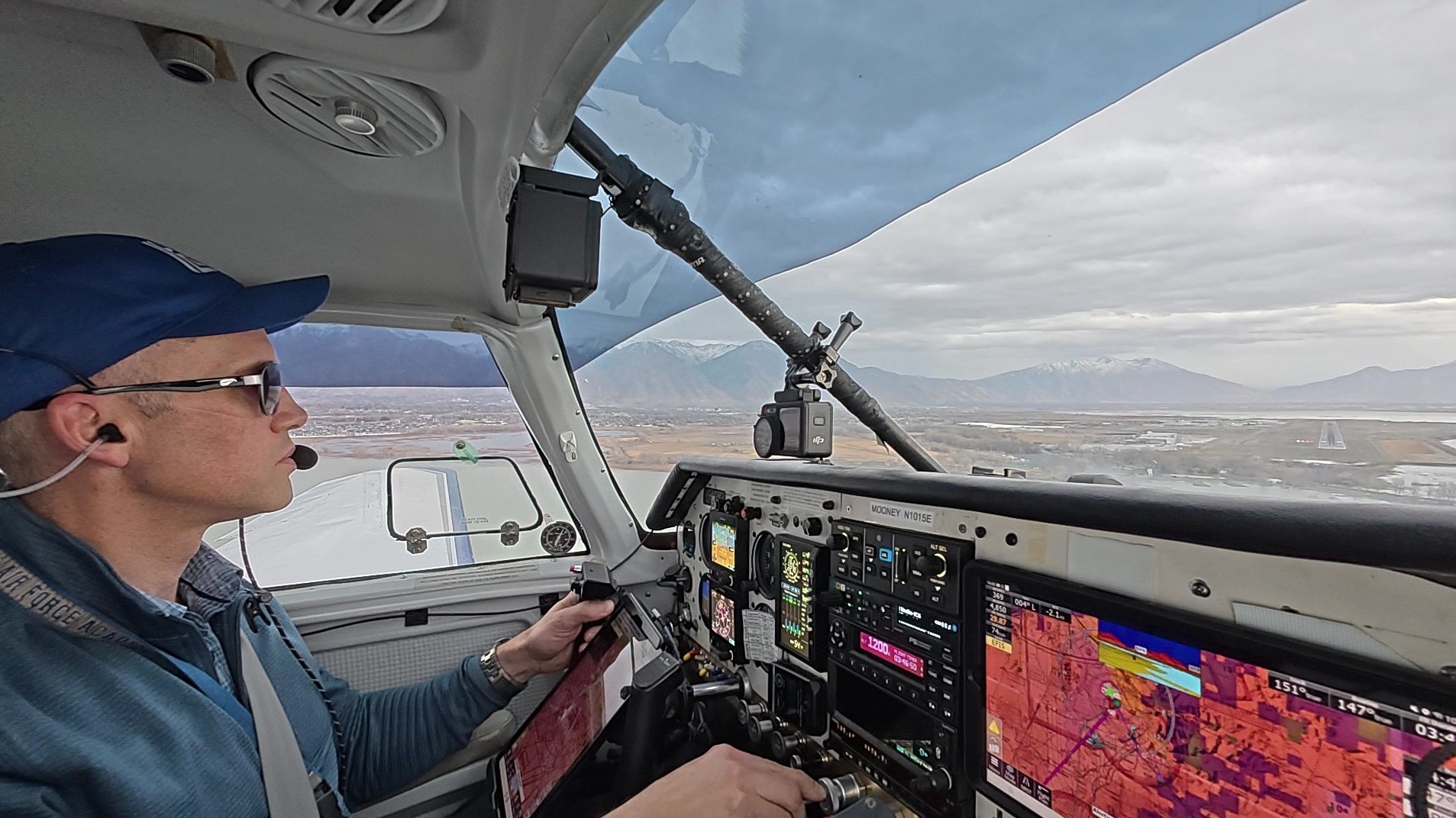
On short final, I kicked in full rudder to align with the runway and dropped the right wing to keep from drifting to the left. We were landing on 13, and the winds on the ground were 9 knots from 220. There is a large berm on the west side of the airport separating the airport from Utah Lake, and that wind was coming up over the berm and rolling across the runway. I had been working the controls all the way down, and just before touching down, we caught that burble, and I made a quick adjustment as my wife instinctively grabbed the pull handle on the door.
Right main touched down, followed by the left main and then the nose. Three little chirps in succession.
We had a great time that evening with family. The grandkids loved opening gifts, and my wife loved being grandma. We built candy sleighs and raced them down the staircase on Hot Wheels tracks and just enjoyed being together. Two days later, on Sunday, we flew home with more beautiful tailwinds. Who would have guessed—tailwinds both ways? We’ll call it a Christmas miracle.